


When I reflect on my first day using Salesforce, I recall feeling a mix of curiosity and confusion. It turns out I wasn’t alone! After chatting with colleagues and reflecting on my own growing pains, I noticed a few classic missteps that seem to pop up for almost everyone starting out.
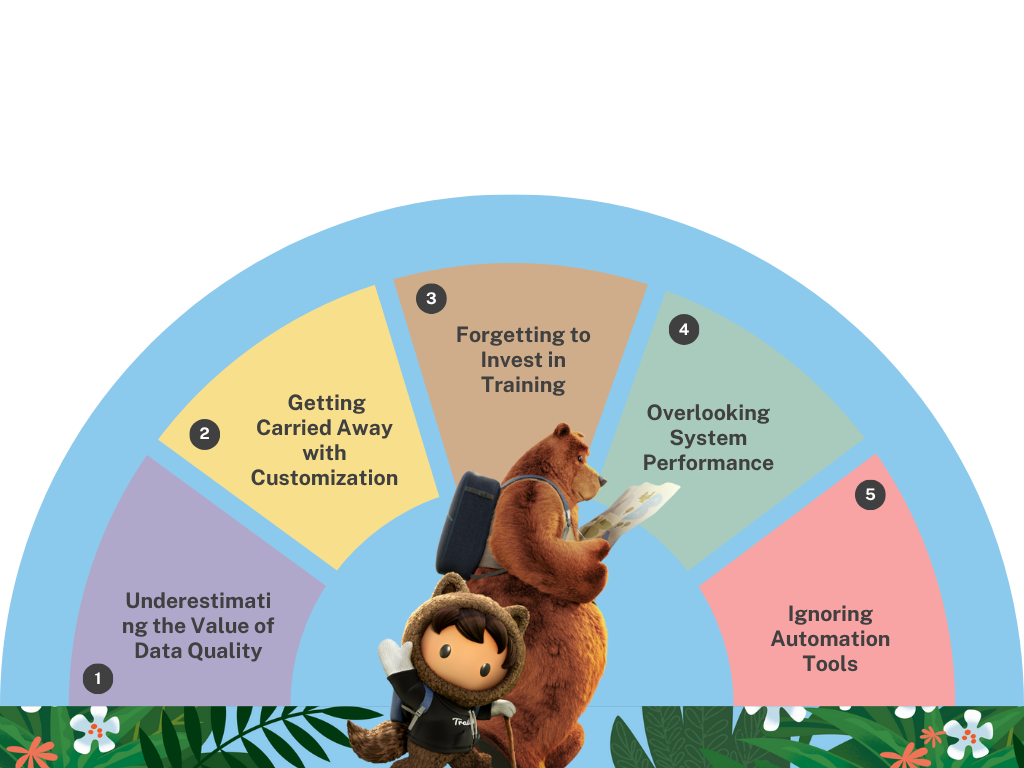
1. Underestimating the Value of Data Quality
Honestly, with all the excitement of logging that first deal or importing leads, it’s easy to treat the database like a scrapbook. But that messy approach comes back to bite you—fast. At my old company, we used to have three versions of the same customer, all spelt slightly differently. The sales team was not amused.
Accurate and consistent data is critical, especially when using AI or automation. Without clean data, even the best tools won’t deliver accurate results. Learn more in this article: Why Your AI Strategy Needs Data Cleaning
2. Getting Carried Away with Customization
I once made the mistake of turning on seemingly every bell and whistle available. Before I knew it, nobody could find the right fields, and admin requests were piling up. The best lesson? Build slowly.
Let the team adapt before adding more knobs to turn — or better yet, focus on thoughtful enhancements, Like sending custom notifications in Salesforce using Flow, to improve user experience while keeping your setup simple and efficient.
3. Forgetting to Invest in Training
I’ll admit, sitting through a training session sounded dull, but skipping it means everyone basically invents their own ways of doing things. It’s wild how quickly processes drift apart. One colleague even made up his own naming system, which the rest of us never understood.
4. Overlooking System Performance
Here’s one I learned the hard way: ignoring system alerts and not checking regular performance reports. Little things, like a sluggish dashboard or overdue integration updates, can become big headaches. Schedule a calendared check-in—you’ll thank yourself later.
5. Ignoring Automation Tools
When I first used Salesforce, I didn’t touch the automation features. Manually tracking follow-ups is a recipe for disaster (and missed opportunities). Automating basic reminders and approvals changed my workflow: simple changes, big difference.